
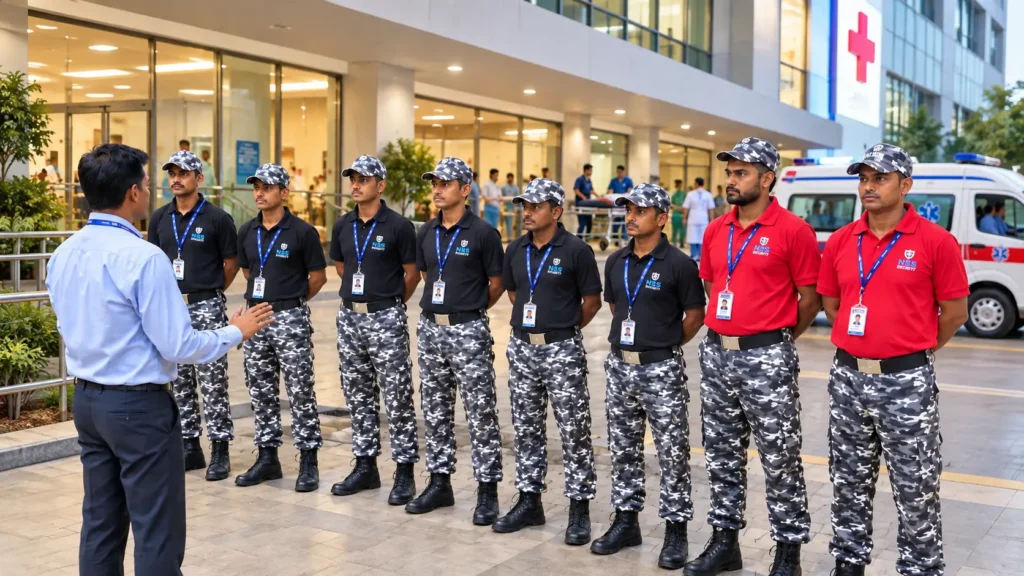
Hospitals are busy places where patients, visitors, doctors, nurses, administrative teams, vendors and emergency responders all work together during the day. All this movement means healthcare institutions need a security system that supports safety, regulated access and orderly operations. Professional Hospital Security Services in Bangalore may help hospitals to manage security requirements at entrances, reception areas, emergency departments, parking lots and other critical sites.
Hospital security involves more than simply securing buildings or high value equipment. It also includes observing access, helping with crowd management, responding to incidents and aiding medical staff in difficult situations. A well-organized security staff can lead to a safer, more professionally managed healthcare environment.
Why Is Hospital Security Important?
Healthcare institutions have security requirements that may not be the same as those of offices, residential buildings and commercial businesses. Hospitals can be quite busy with visitors, emergencies, restricted areas, disputes involving patients and transfer of delicate medical equipment.
A professional hospital security team can support the facility by:
- Monitoring entry and exit points
- Controlling access to restricted areas
- Managing visitor movement
- Supporting crowd and queue management
- Monitoring hospital premises
- Assisting during emergencies
- Protecting equipment, property and designated areas
- Reporting unusual incidents to hospital management
The responsibilities should be organised according to the size, layout, operating hours and specific requirements of each healthcare facility.
What Does a Hospital Security Guard Do?
Once trained, a hospital security guard could be deployed at the gates, reception areas, parking places, wards or assigned areas. Their regular chores could include monitoring entry points, observing visitors in transit, watching the property and reporting security-type concerns.
Security staff can also help keep crowded hospitals in order around emergency areas and help hospital teams when huge crowds assemble. Communication is of vital importance, particularly when dealing with patients, visitors and healthcare workers in a sensitive situation.Security personnel should understand their duties clearly and follow the hospital’s established procedures while escalating serious incidents to the appropriate management or authorities.
Role of a Hospital Security Officer
Depending on the facility’s security structure, a hospital security officer may have larger supervisory or operational responsibilities. This may entail monitoring guard deployment, checking attendance, assessing incidents, arranging shifts and communicating security observations to hospital administration.
Supervision can also help guarantee that the allocated security stations are covered and that procedures are followed consistently. Regular reporting and open communication between hospital management and the security team can bring a more structured approach to day-to-day security operations.
When Is Armed Hospital Security Required?
Some healthcare facilities may choose to employ armed hospital security when their risk assessment, operational needs or applicable legal and regulatory conditions support an armed deployment. This should not be considered as a normal need of all hospitals.
Where armed people are deployed, the hospital and the service provider should ensure that necessary licenses, training, documentation, deployment protocols and legal requirements are fully covered. “The security plan ought to be tied to the facility’s specific risk profile, not a one-size-fits-all approach for every location.
Key Areas Covered by Hospital Security
An effective hospital security plan may cover multiple operational zones, including:
Main Entrance and Reception
Security personnel can monitor visitor movement, guide access and help maintain orderly entry procedures.
Emergency Department
Emergency areas can experience sudden increases in visitor volume. Security teams may help manage movement and maintain clear access routes.
Parking and Vehicle Areas
Parking security can support controlled movement of vehicles, staff access and visitor flow.
Restricted Areas
Certain areas may require controlled access. Security personnel can help prevent unauthorised entry based on hospital procedures.
CCTV and Incident Monitoring
Security teams can coordinate with CCTV monitoring operations and report unusual activities or incidents to the responsible management team.
Choosing a Hospital Security Company in Bangalore
The selection of a service provider should include consideration of such items as guard training and supervision, communication, shift scheduling, background verification, reporting processes and an understanding of the unique security needs of the health care environment.
It is also useful to examine the number of guards required, duty locations, operating hours, emergency protocols and escalation mechanisms prior to deployment. A carefully defined security plan can allow the hospital and the service provider to know their duties.
Hospital Security Services in Bangalore by NSS Guarding & Facility Management Pvt Ltd
NSS Guarding & Facility Management Pvt Ltd offers security-oriented solutions based on the operational demands of different institutions. The security method for healthcare institutions might be based on access control, visitor management, monitoring and guard deployment and day-to-day supervision.
Hospitals can review their site architecture, opening hours, security issues and personnel requirements with the provider before agreeing a deployment plan. This means that the security arrangement can be better tailored to the practical needs of the facility.
Frequently Asked Questions
What does hospital security include?
Hospital security can include access control, visitor management, surveillance support, crowd management, emergency assistance, restricted-area monitoring and protection of designated premises.
Why do hospitals need trained security personnel?
Hospitals have continuous visitor movement and may face sensitive situations. Trained security personnel can help maintain controlled access, orderly movement and timely reporting of incidents.
How should a hospital choose a security provider?
Hospitals should evaluate training, supervision, staffing, reporting procedures, experience, communication practices and the provider’s understanding of healthcare security requirements.
Conclusion
A structured security system can help a healthcare facility run more safely and more organized in day-to-day operations. The right deployment should be based on the size of the facility, visitor flow, operating pattern and special security requirements. Thus, Hospital Security Services in Bangalore can be a key supporting function in access control, visitor management, incident response and overall site security.
NSS Guarding & Facility Management Pvt Ltd may help healthcare organizations understand their operating demands and design an appropriate approach to security deployment when reviewing their security requirements.
